


Startups funding is no longer limited to Silicon Valley insiders or Western founders in 2026. Today, they are dominated by a mix of venture capital firms, accelerators/incubators, and development-finance institutions. These organizations fund early-stage tech companies worldwide including in Nigeria, offering capital, mentorship, and networks.
For Nigerian entrepreneurs, this shift presents a powerful opportunity but also a challenge. While billions of dollars are available through organizations like Y Combinator, Techstars, and Sequoia Capital, accessing these funds requires more than just a great idea. It demands the right structure, traction, and global positioning. Below we profile 20 leading “big” funders as of 2026, detailing their founders, founding year, headquarters, investment focus, notable portfolio companies, and how Nigerian startups can engage them. We also address how these programs handle international founders (including Nigerians) and the key criteria they use.
Key Takeaways:
- Global investors now actively fund Nigerian startups
- Most funding comes from VCs, accelerators, and DFIs
- Many require foreign incorporation (US, UK, Singapore)
- Strong teams and traction matter more than location
- Accelerators remain the easiest entry point
Key Terms Every Nigerian Entrepreneur Must Familiarize With:
Before we explore the top 20 leading global funding organizations in 2026, it’s important to familiarize yourself with the key terms used in these ‘big’ startup ecosystem. Whether you’re a newbie or already building, these key terms will help you understand and navigate the below listed opportunities more confidently. But before you continue checkout how to validate that business/idea before you start to spend or seek investment. When or where ever you are lost/confused in this article, you can come back to this key terms and get back on track, with that said lets dive in.
- Venture Capital: is a company that invests money in startups with high growth potential in exchange for equity (ownership). Simply put, they are investors betting on your future success. They don’t give loans, they buy a percentage of your business, they make their own money when your startup grows or gets acquired by another, examples include Sequoia Capital and Andreessen Horowitz.
- Seed Investment: is the first official funding a startup receives, used to build your product (MVP), it covers early costs like development, marketing, and hiring and it can range from $10,000 to $500,000. This is the money that helps turn your idea into a real business.
- Accelerators: startup accelerator programs help startups grow quickly within a short period (usually 3 months). They provide funding (small equity investment), mentorship, networking opportunities, investor exposure (Demo Day), examples are Y Combinator, Techstars. They are like “ bootcamp/ fast-track schools” for startups, that help keep you in track.
- Incubators: startup incubator programs support very early-stage startups (even at idea stage). They focus more on that your idea, help nurture/develop it, give it structure and help guide/hold your hands in the long-run. The difference between it and accelerators is that, incubators start from scratch/idea level and grows gradualy but accelerators invest in exhisting startups/businesses and helps it skyrocket.
- Development Finance Institutions (DFIs): they are organizations that fund businesses to promote economic development. Examples, International Finance Corporation, British International Investment, they often invest in African markets, support infrastructure, fintech, agriculture, offer long-term or low-interest funding. They dont seek profit, their majour interest is economic growths of developing countries.
- Traction: startup traction refers to proof that your business is working, this includes, number of users, revenue growth, cstomer demand. Most investors care more about traction than ideas
- Startup Team: your founding team is the group of people building the business/startup with you. Investors evaluate their skills (tech, business, marketing), experience and commitment. A strong team can get funding even before strong revenue.
Top 20 Global Startup Funding Organizations (2026)
1. Y Combinator (YC) – Silicon Valley, USA
Founders/Owners: Paul Graham, Jessica Livingston, Robert Morris, Trevor Blackwell.
Founded: 2005. HQ: Mountain View (since 2019 in San Francisco). Focus/Sectors: General tech (software, hardware, internet services, etc.). Notable Graduates: Airbnb, Dropbox, Stripe, Coinbase, Instacart. YC pioneered the startup accelerator. It provides seed investment (currently $500K for 7% equity) plus intensive 3‑month mentorship. The firm looks for strong founding teams and big ideas across sectors. YC accepts companies at any nationality, but the startup must be incorporated in one of YC’s preferred countries – US, Canada, Cayman, or Singapore (YC helps accepted teams re-incorporate if needed).
How to engage: Apply via the YC website (batches run four times/year) and prepare for a rigorous interview. YC does not require founders to relocate after funding (teams can work globally), only an in‑person kick-off is held in Silicon Valley. Many African/Nigerian startups have been accepted (e.g. fintech startups, agritech, healthtech); success there has inspired YC to note that great startups can come from anywhere.
2. Techstars – Colorado, USA (global)
Founders/Owners: David Cohen, Brad Feld, Jared Polis, David Brown. Founded: 2006. HQ: Boulder, Colorado. Focus/Sectors: Early-stage tech in any industry (software, fintech, IoT, energy, etc.) via 3‑month accelerators. Notable Alumni: PillPack, Sphero, SendGrid, Remitly, DigitalOcean. Techstars has dozens of accelerator programs worldwide and typically invests $20K for 6% equity in each startup. Over 4,900 companies have participated, spawning 21 unicorns.
How to engage: Techstars runs a range of location- and industry-specific programs. Nigerian entrepreneurs can apply to global programs or the Techstars ARM Labs Lagos accelerator (focused on African fintech/e-commerce/mobile startups). For example, the 2023 ARM Labs Lagos cohort included 10 Nigerian startups. Techstars applications are open online; companies need not be in the US to apply, and accelerators often relocate teams to the program city for 3 months. Techstars emphasizes team strength and traction, and, like YC, boasts “great ideas from anywhere”.
3. 500 Global (formerly 500 Startups) – California, USA (global)
Founders/Owners: Dave McClure, Christine Tsai. Founded: 2010. HQ: San Francisco, with offices worldwide (Latin America, MENA, Asia). Focus/Sectors: Seed-stage tech startups across sectors (fintech, SaaS, marketplaces, biotech, etc.). Notable Portfolio: Udemy, Twilio, Grab, Talkdesk, Credit Karma, Canva. 500 Global has ~$2.3B AUM and has invested in over 2,700 companies globally.
How to engage: 500 Global runs accelerator programs and seed funds. They accept global applicants and have a history of investing in African startups (e.g. Lagos office, MENA initiatives). Through its Africa efforts, 500 invested in Nigerian ventures like SureGifts and Podozi, showing local founders can get attention. Eligible startups typically have a tech product and some traction; applications are done online. 500 Global offers mentorship, a $150K–$500K seed check (varying by program), and emphasizes a “global outlook”. Nigerian startups can apply directly, and building relationships with 500’s Middle East/Africa team (e.g. via events or PitchBook connections) can help.
4. Sequoia Capital – California/Global
Founder: Don Valentine. Founded: 1972. HQ: Menlo Park, California (with major offices in China, India, Israel, and Singapore). Focus/Sectors: Technology at seed through growth stage (IT, healthtech, fintech, consumer, etc.). Notable Investments: Early bets in Apple, Cisco; more recently Google, YouTube, Airbnb, Stripe, Dropbox, ByteDance. Sequoia’s funds manage tens of billions.
How to engage: According to their official site Sequoia is extremely selective and typically invests in startups with significant traction. They accept founder pitches but prefer introductions (e.g. via existing portfolio founders). There is no formal open application. Nigerian startups can attract Sequoia’s India/China fund if expanding internationally, but often Sequoia invests via local partners. The firm has backed African unicorns (e.g. Chipper Cash) through regional teams. Generally, foreign startups need to build a compelling global narrative and often a US presence (incorporation in Delaware, etc.) to be considered.
5. Andreessen Horowitz (a16z) – California, USA
Founders: Marc Andreessen and Ben Horowitz. Founded: 2009. HQ: Menlo Park, California. Focus/Sectors: Very broad tech (enterprise, consumer, biotech, fintech, crypto, gaming, etc.). Notable Investments: Early funder of Twitter, Facebook, Airbnb, Coinbase, Lyft, Slack, Instacart. A16z has ~$90B under management (2026).
How to engage: A16z typically invests through closed VC rounds (Series A and later) and does not run public programs or accelerators. Startups seeking A16z funding usually engage via introductions (e.g. via fellow founders or mutual investors). Nigerian startups with global traction (perhaps on a high-growth Fintech or crypto play) could catch their eye, but legally they would likely incorporate in the US or UK. A16z focuses on big-market, high-growth tech companies; they emphasize team and product-market fit over geography.
6. Accel (Accel Partners) – California & London
Founders: Arthur Patterson and Jim Swartz. Founded: 1983. HQ: Palo Alto, California (also major offices in London, Bangalore, etc.). Focus/Sectors: Early- and growth-stage tech (enterprise SaaS, consumer apps, fintech, etc.). Notable Investments: Facebook (Accel’s 2005 investment gave 10% of Facebook), Spotify, Slack, Atlassian, Dropbox, Vox Media. Accel manages ~$30B+.
How to engage: Accel operates by invitation/intro. They have regional funds (Accel US, Accel London/India). Nigerian entrepreneurs are generally expected to incorporate in the UK or US for Accel’s interest. Accel’s team values strong product vision and traction. There’s no public application; startups often meet Accel at international pitch events or via network referrals. Accel invests globally (Accel India and Accel London funds may fund African startups with a local angle).
7. Lightspeed Venture Partners – California, USA (global)
Founders: Barry Eggers, Ravi Mhatre, and others. Founded: 2000. HQ: Menlo Park, California. Focus/Sectors: Technology across stages – enterprise, consumer internet, fintech, healthtech, and energy. Notable Investments: Snap (Snapchat), Affirm, Nest (smart home), Affirm, WeWork, Stripe, MuleSoft, Giphy. Lightspeed has $35–50B AUM.
How to engage: Lightspeed runs on connections. Its partners scout deals via accelerator demo days and conferences. Some Lightspeed funds (e.g. Lightspeed India) may consider African startups. There is no open application, but lightspeed does engage with promising founders at global events. We note Lightspeed’s strong US presence; Nigerian startups targeting US market or with diaspora links (e.g. founders in US-Nigeria diaspora) may stand a better chance.
8. Bessemer Venture Partners – California, USA (global)
Founders: Henry Phipps and Company (as part of Carnegie Steel). Founded: 1911 (one of the world’s oldest venture funds). HQ: San Francisco (also Boston, Israel, India). Focus/Sectors: Technology across stages (cloud, fintech, consumer apps, biotech). Notable Investments: LinkedIn, Shopify, Pinterest, Yelp, Skype, Twilio, Wix. Bessemer’s portfolio is enormous, with 35+ unicorns.
How to engage: Bessemer invests by founder networks. They publish writing (e.g. “Anti-Portfolio”) and blog advice. Startups can approach by getting intros to Bessemer partners (who often share founders). No formal applications. Nigerian entrepreneurs often approach Bessemer only after traction. Bessemer does have a presence in India/Israel but no known African office; they may co-invest with Africa-focused funds. They typically look for scalable cloud software and marketplaces.
9. Tiger Global Management – New York, USA (global)
Founder: Chase Coleman (former Tiger Cub). Founded: 2001. HQ: New York City. Focus/Sectors: Growth-stage internet and consumer companies worldwide (fintech, e‑commerce, social, enterprise). Notable Investments: ByteDance (TikTok), JD.com, Flipkart, Coinbase, Stripe, Spotify, Nubank, LinkedIn, and many others. Tiger has ~$55B AUM (2024).
How to engage: Tiger Global invests almost exclusively at later stages (Series B+). They have no public program; founders must impress through fundraisings or pitch through prominent bankers/lawyers. For Nigerian startups, Tiger has invested via Tiger Africa opportunities (e.g. fintech companies). In fact, Tiger led a funding round for Nigerian unicorn OPay (though it later faced challenges). The firm looks for high growth and global potential. Nigerian founders would typically raise a round with Tiger as lead, coordinated by African VCs or investment banks.
10. New Enterprise Associates (NEA) – USA (global)
Founded: 1977. Founders: Dick Kramlich, Chuck Newhall, Frank Bonsal. HQ: Chevy Chase, Maryland (Silicon Valley office). Focus/Sectors: Broad tech and healthcare (software, consumer, life sciences, etc.). Notable Investments: Salesforce, Tableau, Workday, Robinhood, Coursera, 23andMe. NEA’s funds total ~$28B.
How to engage: NEA invests from seed through growth. They have a global footprint (US, India, China). No accelerator; approach via pitch or referral. Nigerian startups would most likely appeal to NEA’s global tech or fintech themes. NEA has backers in Africa too, and invests via partnership if a startup promises strong return. Likely need US incorporation.
11. Index Ventures – Europe/USA
Founders: Neil Rimer, David Rimer, Giuseppe Zocco. Founded: 1996 (originated in Geneva). HQ: London (with offices in San Francisco, New York, Geneva, Jersey). Focus/Sectors: Early- and growth-stage tech (consumer internet, fintech, biotech). Notable Investments: Skype, Dropbox, Etsy, Slack, Roblox, Klarna, MongoDB. Index has €11.7B assets under management.
How to engage: Index has a reputation for backing European success stories but also invests US/Israel. They scout via tech hubs and contacts. Nigerian founders might engage if they have European traction or connections (for example, fintech founders of African origin in London). Index does not have a formal open program. Its team favors ambitious founders with scalable models.
12. Khosla Ventures – USA
Founder: Vinod Khosla (ex-Kleiner). Founded: 2004 (as part of Kleiner Perkins initially). HQ: Menlo Park, California. Focus/Sectors: Deep tech, enterprise IT, consumer internet, energy, bio. Notable Investments: Square, DoorDash, Impossible Foods, Instacart, Zynga. Khosla V has ~$15B AUM.
How to engage: Khosla often invests in ambitious, “moonshot” tech ideas. They meet founders via VC networks. No open intake; introductions are key. Nigerian startups with cutting-edge tech or innovative energy/agrifood solutions could fit Khosla’s style.
13. Founders Fund – USA (San Francisco)
Founders: Peter Thiel, Ken Howery, Luke Nosek, Sean Parker (2005). Founded: 2005. Focus/Sectors: Technology (consumer web, enterprise software, fintech). Notable Investments: SpaceX, Palantir, Airbnb, Lyft, Facebook, Stripe. They are less sector-specific, looking for founders with big visions.
How to engage: Founders Fund is invitation-only. They rely on networks and major deal flow. Nigerian entrepreneurs are unlikely to approach Founders Fund unless their startup is at hyper-scale and already on the global radar (e.g., a pan-African fintech unicorn).
14. Kleiner Perkins (KP) – USA
Founded: 1972 (Benchmark-era also 70’s). HQ: Menlo Park, California. Focus/Sectors: Technology and life sciences. Early investor in Google, Amazon, AOL, Genentech. In recent years, focus on enterprise, AI, bio.
How to engage: KP runs some programs (e.g. KP Fellows for student founders), but generally invests via pitch rounds. Very selective; again, network-based. The firm’s investments in Africa have been limited (they tend to stick to US/China), but any unique tech from Nigeria could be of interest if it has a strong US connection.
15. SoftBank Vision Fund – Tokyo/London
Founder: Masayoshi Son. Founded: 2017 (SoftBank Vision Fund 1). HQ: London (Fund management, Vision Fund). Focus/Sectors: Large-scale tech (AI, e-commerce, robotics, mobility, energy). Notable Investments: ByteDance (TikTok), Uber, DoorDash, WeWork (infamously), Slack, Grab, OYO Hotels, Ping An Good Doctor, and many others. Vision Fund had ~$134B under management (2023).
How to engage: SoftBank typically leads or co-leads massive Series C+ rounds. It does not run an open application. Nigerian tech companies would have to achieve large valuations to attract SoftBank (e.g. Jumia’s high valuation once). SoftBank’s vast capital means it looks for global domination stories, not small-scale.
16. Google Ventures (GV) – California, USA (Alphabet VC)
Founder: Bill Maris (Google Ventures). Founded: 2010. HQ: Mountain View, CA (offices also in NY, London, SF). Focus/Sectors: Google’s corporate VC arm invests in seed to growth-stage tech startups across software, hardware, life sciences, fintech, AI, etc.. Notable Investments: Uber, Nest, Slack, Flatiron Health. GV’s funds total ~$8B.
How to engage: GV considers startups globally but favors those with strong tech fits for Google’s interests. Startups can apply through GV’s website or via introductions. There is no region restriction, but GV (now Alphabet VC) is very competitive. Nigerian entrepreneurs with breakthrough tech (especially in AI or health) could try to get introductions, perhaps via US accelerators or alumni networks.
17. International Finance Corporation (IFC) – Washington, D.C.
Owner: World Bank Group (1956) – not a “firm” per se but a top global lender for private sector. Focus/Sectors: Infrastructure, financial institutions, agribusiness, and also venture. Notable: IFC invests in Nigerian financial institutions and large projects. While not a typical “startup VC,” IFC has funds (like the Africa Frontier Fund) that co-invest in African tech ventures. Nigerian fintechs (banks, payments) often see IFC backing.
How to engage: IFC mainly works through large funds or local banks. Startups cannot apply directly; instead, they partner with IFC-backed funds (e.g. inclusion funds, SMEDF, Venture funds). For example, an IFC-managed fintech investment fund once invested in Nigerian banks. Nigerian startups should look for IFC-affiliated venture funds (e.g. Africa Growth Fund, curated by IFC) or large grant programs.
18. British International Investment (formerly CDC Group) – London/UK
Owner: UK government development finance institution. Founded: 1948. Focus/Sectors: Growth-stage businesses in Africa/Asia (financial services, healthcare, energy, agriculture, and tech). Notable African Investments: Jumia (Nigeria), TeamApt (Nigeria), Moniepoint (Nigeria), Greenlight Planet. CDC has committed over $1B in African startups.
How to engage: CDC (rebranded British International Investment) co-invests via funds or direct equity. It has specific equity funds for Africa. Startups need to approach CDC via investment proposals or through CDC’s partner funds. Nigeria’s largest tech companies (e.g. fintechs) have CDC backing, so smaller startups might look to CDC-backed VCs like Novastar or Partech Africa as a conduit.
19. IFC/DFI-backed Venture Funds
Other top global development finance institutions (DFIs) and philanthropies actively fund African startups: e.g. African Development Bank’s Africa Ventures fund; Norwegian, Dutch, USAID funds; Bill & Melinda Gates Foundation’s Agri-tech programs; etc. These are large institutions (World Bank/DFIs) offering grants, equity, or guarantees to encourage private investment in Nigeria. Startups can access them via grant proposals or by joining networks like Global Innovation Fund, USAID’s Development Innovations Ventures, etc.
20. Other Global Accelerators/Programs
Beyond the above, several international accelerator programs target emerging-market founders. According to Google for Startups (GFS) they also run African programs and bootcamps; M12 (Microsoft) has accelerator initiatives; Startupbootcamp (FMO/ING) has African fintech tracks; Plug and Play and SOSV’s programs (HAX, IndieBio) are open to global applicants; Antler has offices worldwide, including Lagos. Many multinationals (e.g. Visa, Citi, Schlumberger) offer startup challenges for solutions in finance or energy. These programs often have specific country/sector eligibility (e.g. only African nationals for an Africa track).
How to engage (general): The usual path is through formal online applications or partner networks. Most large accelerators publish criteria on their websites. Meetups and pitch competitions (e.g. RiseUp Summit, Seedstars) also attract these big firms’ scouts. U.S./EU travel (for accelerators or demo days) may be required. Importantly, Nigerian startups must focus on meeting the funders’ terms: many VCs will ask to incorporate the company in a favorable jurisdiction (often Delaware, UK or Singapore) and to build an all-star team.
How Nigerian Startups Actually Get Funded
Nigerian entrepreneurs face both opportunity and competition when tapping global investors. Most of the above organizations are open to international founders, but they each have their own eligibility nuances. For example, Y Combinator explicitly requires the startup be a U.S., Canada, Cayman, or Singapore corporation. Techstars’ African programs (e.g. ARM Labs Lagos) are explicitly for Africa-based founders. 500 Global, IFC, and CDC funds focus on emerging markets including Nigeria (CDC explicitly mentions Jumia and Nigerian fintechs). Conversely, some funds (like Sequoia US, A16Z) mostly scout Silicon Valley or major tech hubs and expect foreign startups to have local entity ties.
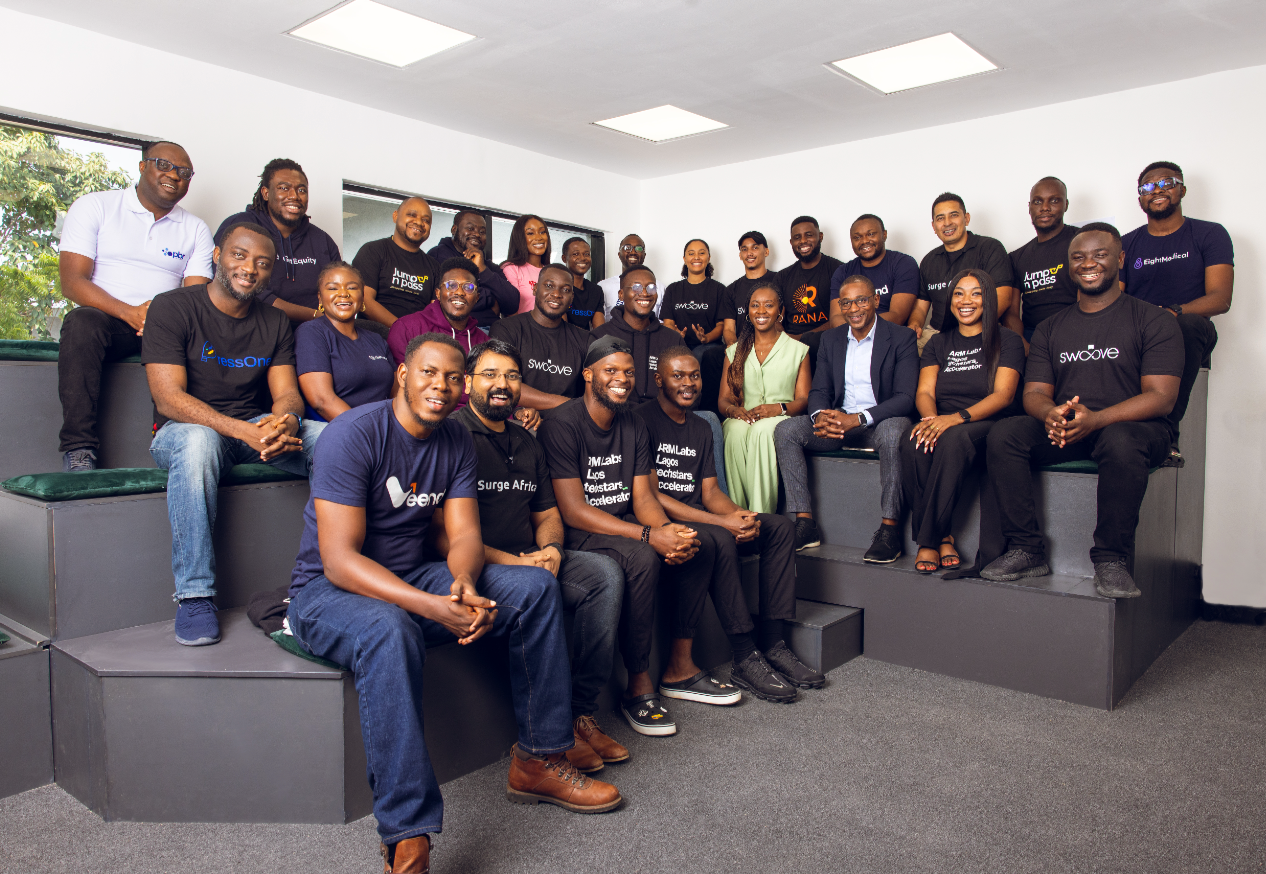
How Nigerian Startups Get’s Funding and Increase Success Rate:
- Build Local Validation: MVP (working product), have first users or revenue, solve real problems in Nigeria/Africa, Investors want proof, not ideas.
- Join African Accelerator: Network strategically, join the likes of, CcHub, Ventures Platform, Techstars Lagos etc. Warm intros > cold applications
- Raise Seed Funding: From local and global seed funds
- Expand Structure: Even if you operate in Nigeria, think global scale, build towards global competance and compliance structure, if capable incorporate in the nearest african countries kenya, south-africa, ghana etc, then outside africa, US/UK etc
- Apply to the right stage: Do not approach the likes of Sequoia at idea stage
- Be investor-ready: Clean pitch deck, clear metrics, scalable business model
Ensure you meet basic legal criteria (for YC/Accel/GV, that may mean re-incorporating in an approved country). Apply widely to accelerators – many are remote-friendly now or hold Africa-specific cohorts. Leverage regional incubators (CcHUB, Ventures Platform, etc.) that have partnerships with global funds. Polish a strong pitch deck emphasizing product/market fit and team. Attend tech conferences (e.g. Techpoint Africa Summit) where global VCs network. Finally, use warm introductions: for top VCs, referrals from known entrepreneurs or institutional investors are often needed.
Which Funding Option Should You Target?
Depending on the level of your business, below you will see the one best for your startups:
| Stage | Best Options |
|---|
| Idea Stage | Antler, Google for Startups |
| Early Stage | YC, Techstars, 500 Global |
| Growth Stage | Accel, Sequoia, a16z |
| Late Stage | SoftBank, Tiger Globa |
Why Some Nigerian Startups May Get Rejected
Most Nigerian startups don’t get rejected because they are “bad ideas.” they get rejected because they don’t meet investor expectations at the right level. Below is why:
- No Clear Traction (Users or Revenue): Many founders apply with just an idea or a newly built app. But investors especially firms like Y Combinator or Sequoia Capital are looking for proof, not promises.
- Weak Founding Team Structure: A startup is not funded based on idea alone, it’s funded based on who is building it. Investors reject solo founder with no technical or business support, friends as co-founders with no defined roles, they ask “If things go wrong, can this team survive and adapt?”
- Poor Pitch Storytelling: How you sell yourself/business is everything, many Nigerian founders focus too much on just explaining the product and listing it’s features instead of the solution their products brings, why it matters to Nigerians or the market they are selling to, and why now.
- Wrong Stage Targeting: This is were most Nigerian startups/entreprenuers make the biggest mistakes, for instance Applying to Andreessen Horowitz with just an idea, Pitching Tiger Global Management without revenue. Knowing the level/stage you are in your business, helps you target the right funding platform best for you.
- No Global Scalability Plan: Investors are not just funding a Nigerian business, they are funding a scalable company. They want to know if your business is capable of growing and expanding beyond your country/region.
- No Warm Introductions (Networking Gap): Top investors rarely invest from cold emails alone, firms like Sequoia Capital and Accel rely heavily on referrals, trusted network, known founders.
Related Article: Top International Programs That Fund African Startups
Frequently Asked Questions
- Can Nigerian startups apply to these global programs?
Yes – virtually all the above funders accept applications from any country, including Nigeria. YC and Techstars explicitly welcome foreign founders. The main caveat is legal structure: YC requires a supported incorporation (US/SG/Cayman), while others (500 Global, accelerators) often have more flexible or local entity rules. Programs like Techstars Lagos or Google Launchpad Accelerator Africa are designed for African startups. (Nigerian founders should check each program’s website for country-specific terms.) - What stage or sectors do they fund?
Generally, these organizations focus on early-stage tech. Accelerators (YC, Techstars, 500) target pre-seed to seed-stage startups with MVPs and initial traction. VCs like Sequoia, Lightspeed, A16Z, NEA fund seed through Series C/D rounds – typically companies with some revenue or product-market fit. Sectors are broad: software, fintech, healthtech, e-commerce, AI, agritech, etc.. Most have no industry exclusion; their portfolio lists (e.g. YC’s alumni, Techstars’ unicorns) span marketplaces, SaaS, hardware and more. Nigeria’s hot areas (fintech, e-commerce, health) are well within scope. - Do I have to relocate or give equity?
Many accelerators do require founders to relocate temporarily for the program (YC’s 3-month SF batch, Techstars’ 3-month cohort), though some have hybrid or remote options now. All take equity: YC typically takes 7% for $500K; Techstars takes 6% for $20K; most VCs take standard equity in a priced round (often 10–30% over several rounds). Grant programs or DFIs (IFC, CDC) may offer non-dilutive options, but these are rare. Nigerian founders should budget for giving up part of ownership in exchange for big capital and support. - Are there funding programs only for Nigerians?
While most big funds are international, some programs focus regionally. In Nigeria, the government-backed Nigerian Startup Act and agencies like the Nigerian Sovereign Investment Authority have capital for local tech. There are also Africa-wide contests (e.g. Africa’s Business Heroes by Jack Ma) that include Nigerian entrepreneurs. However, the “big 20” above are global – none limit strictly to Nigerian citizens. Rather, they may favor companies based in certain regions (e.g. African accelerator programs). - How to improve my chances?
- Build traction: Show users or revenue growth. For example, accelerators often want at least a working prototype and some customers (Techstars stats say companies raise $1M+ in their first funding after the program).
- Strong team: Have co-founders with complementary skills. Top funds emphasize team quality (experienced founders or domain experts).
- Network: Get warm intros. This could be via previous accelerator batches, investor events in Lagos/Abuja, or diaspora connections. Often a referral from a known founder is required.
- Legal readiness: Be ready to incorporate in investor-preferred jurisdictions if needed (YC’s list). Have clear cap tables and intellectual property in place.
- Cultural fit: Each firm has its style. YC likes “ambitious hackers,” Techstars values coachability and community. Research each program’s alumni to see if your startup fits their portfolio.
Nigerian startups have succeeded in reaching these big funders. For instance, SureGifts (fintech gift cards) and Podozi (beauty e-commerce) were accepted into 500 Startups’ accelerator. Techstars’ Lagos programs explicitly target Nigerian startups. Even SoftBank and Sequoia have taken interest in mega-Nigerian cases (like OPay/Jumia). The biggest challenge is often scaling – global investors look for startups that can quickly expand across Africa and beyond.
Global investors are increasingly eyeing Nigerian/African innovation. By taking time to understanding each funder’s focus and leveraging local gateways (accelerators, pitch events, development funds), Nigerian startups can access the same sources of capital that propelled Silicon Valley giants.